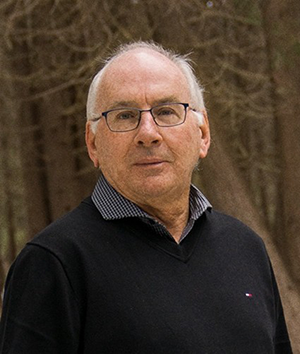
Paul Hebert
Paul Hebert is Professor of Integrative Biology and CEO of the Centre for Biodiversity Genomics at the University of Guelph. He holds a BSc in Biology from Queens, a PhD in Genetics from Cambridge, and a PDF from Sydney. Hebert founded and led the Biodiversity Institute of Ontario for a decade before transitioning it to the CBG in 2015. As one of Canada’s 19 Major Research Infrastructures, the CBG provides informatics, organizational, and sequencing support to the bioscience community. As Scientific Director of the International Barcode of Life, Hebert has coordinated its two major research programs (BARCODE 500K, BIOSCAN). His 600 publications have generated 120K citations while he has trained more than 100 graduate students and postdoctoral fellows. He is an Officer in the Order of Canada, a Fellow of the Royal Society of Canada, holds four honorary degrees, and received the 2018 Heineken Prize for the Environment, the 2020 MIDORI Prize for Biodiversity, the 2024 Benjamin Franklin Medal for Earth & Environmental Science, and the 2025 Award for Outstanding Research & Development in Biodiversity from the Nobel Sustainability Trust.
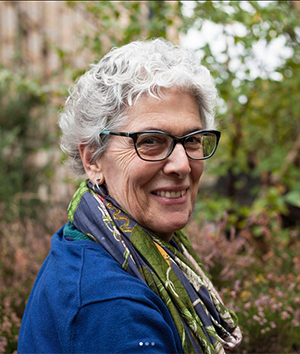
Sandra Knapp
Sandy Knapp is Director of Research at the Natural History Museum in London and a research botanist whose specialty is taxonomy and evolution of the nightshade family, Solanaceae. Her work spans biodiversity and genomics, integrating across fields for better understanding and a sustainable planet. Sandy has served on numerous editorial boards and has led several NGOs, including the Linnean Society of London, Fauna & Flora USA, the International Association for Plant Taxonomy and the Botanical Society of Britain and Ireland. She has received numerous awards for her work in outreach, biodiversity conservation, and botanical science. Sandy holds honorary professorships at University College London and Stockholm University. She has been elected to the American Academy of Arts and Sciences, the Academia Nacional de Ciencias of Argentina, Academia Europeana and is a Fellow of the Royal Society. She was awarded an OBE in the King’s New Year Honours in January 2023 and in 2024 the Engler Medal in Gold by the International Association for Plant Taxonomy for lifetime achievements in botany. She is passionate about promoting the role of taxonomy and the importance of science for conservation and sustainable development worldwide and is committed to increasing openness, diversity, and inclusion in science.
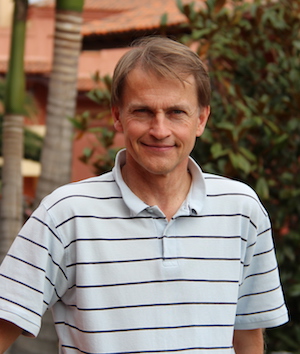
Fredrik Ronquist
Fredrik Ronquist is a Professor of Entomology at the Swedish Museum of Natural History in
Stockholm. He worked on the morphology, systematics and evolution of gall wasps and their parasitic relatives for his PhD at Uppsala University, and became interested in computational phylogenetics when trying to address problems in the evolution of gall wasps and in the evolution of insect-host plant associations more generally. With John Huelsenbeck, Ronquist developed MrBayes, a popular software package for Bayesian phylogenetic analysis. Subsequent work in this direction has focused on more generic tools for Bayesian inference, most recently using universal probabilistic programming. In his insect research, Ronquist has studied evolution and diversity from several different perspectives. The evolution of insect host plant associations has been a central theme, as well as the study of the systematics and diversity of poorly known groups of Hymenoptera and Diptera. Recently, his empirical research has focused on comparative analyses of insect faunas using deep metabarcoding in the Insect Biome Atlas project. Ronquist is a member of the Royal Swedish Academy of Sciences and the Scientific Council of the Swedish Research Council. He is also chairing the Station Linné Foundation, a non-profit running a field station on Öland focused on insect diversity research.